 StormPilot Guide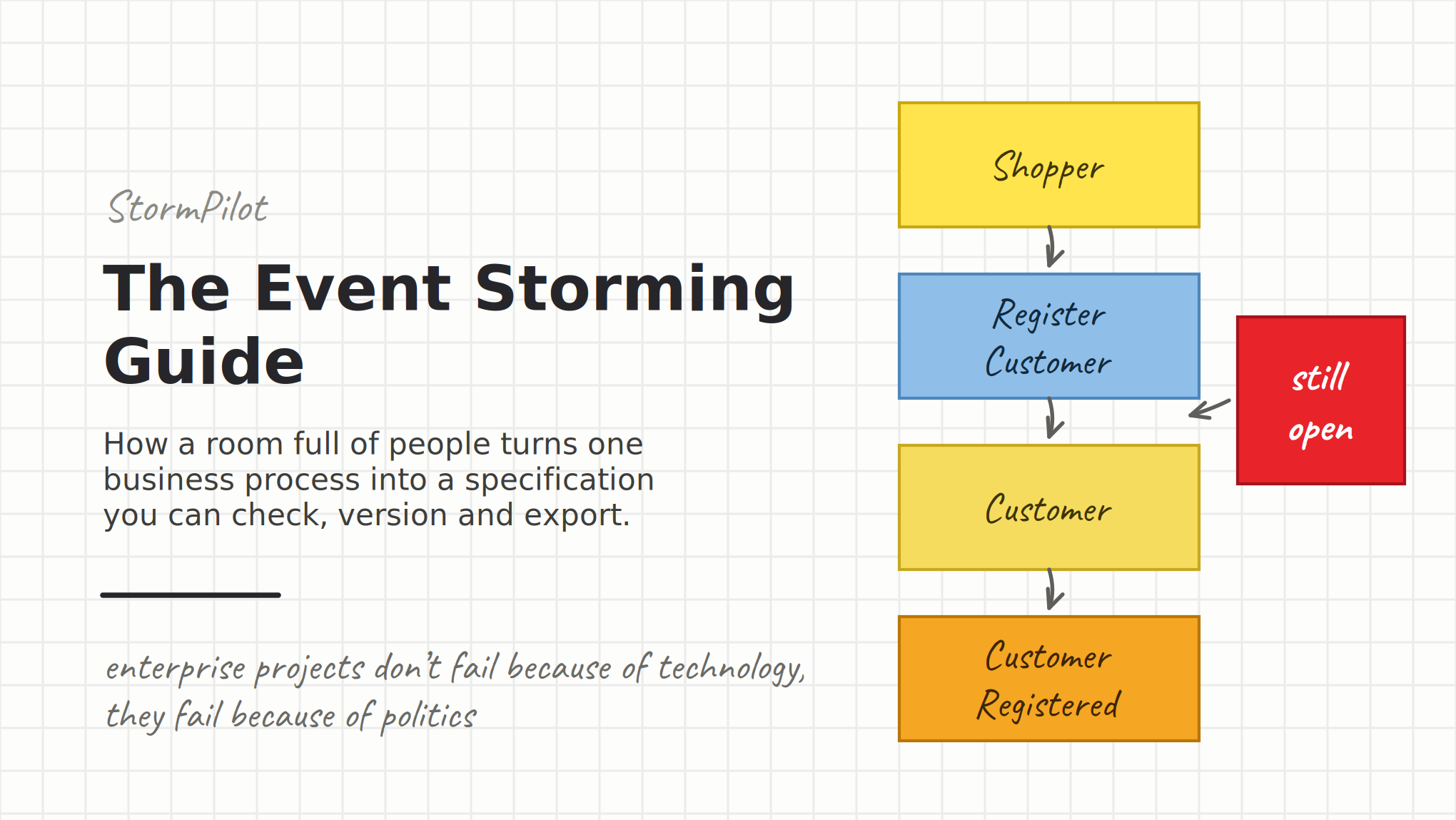
The AI Specification Trap
Ask an artificial intelligence to describe a business process. It will happily produce every step, in the right order, with nothing obviously wrong on the surface.
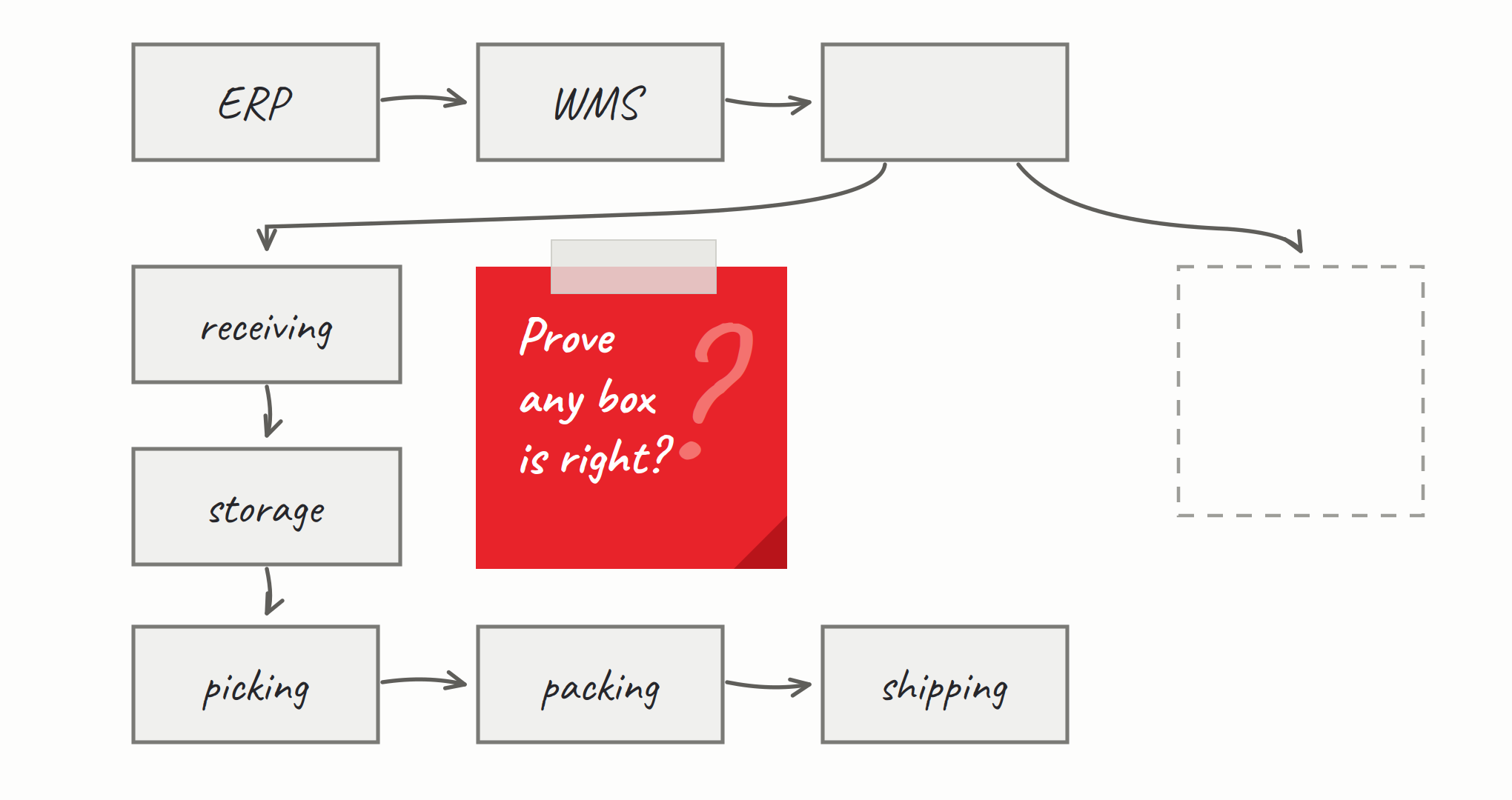
One of those claims can be tested against real behavior. The other only survives until someone who knows the business actually looks at it.
Not Another Miro Board
Most teams already have an answer for that. Open a whiteboard, keep a chat assistant in another tab, sketch the flow together.
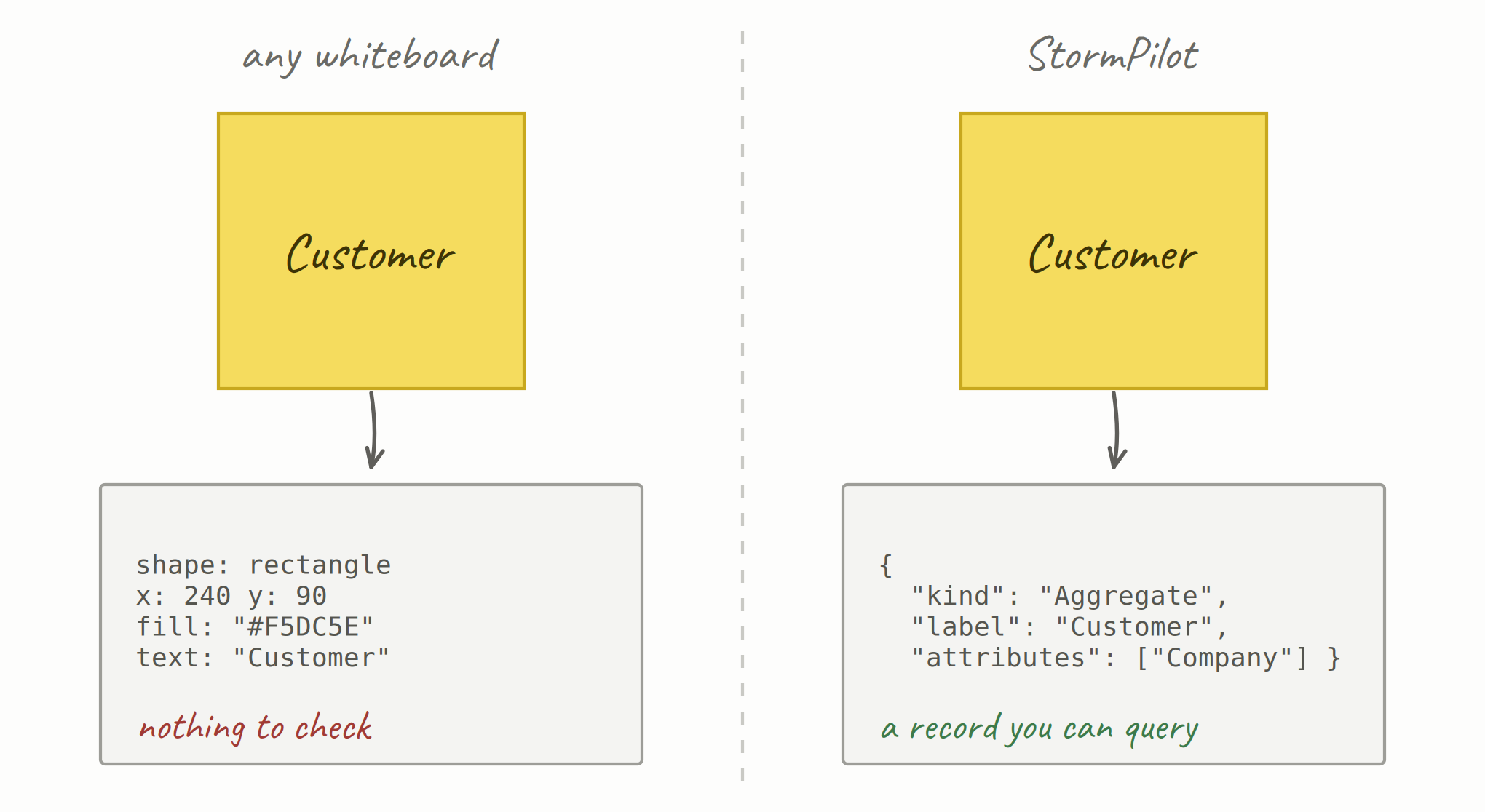
A rectangle with text in it can't be checked for consistency, can't be saved as a version, and can't be exported into anything an engineer could actually build from.
What Structured Event Storming Is
Event Storming exists to fix precisely that. It is a facilitated workshop where the domain gets built live.
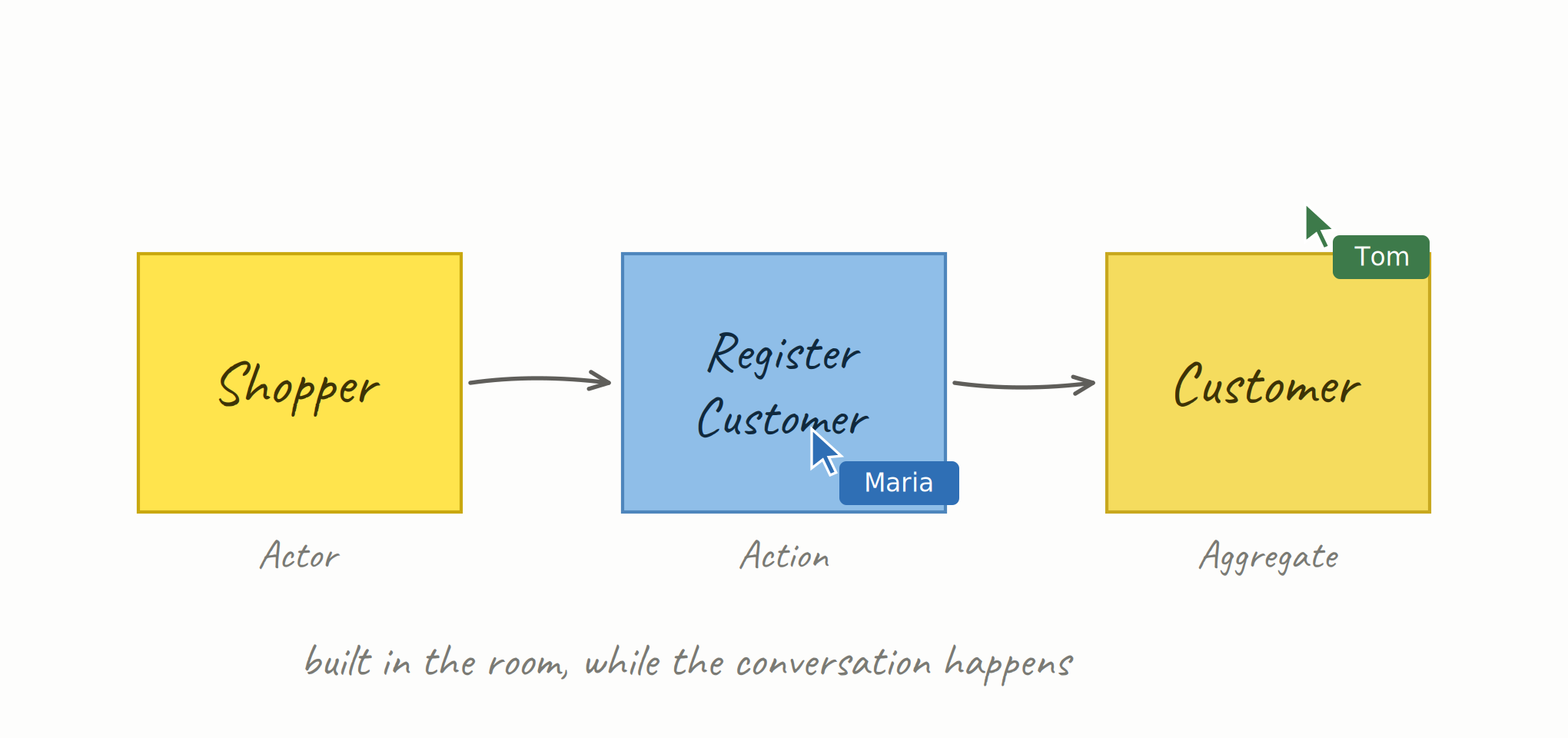
A Facilitator keeps the room moving while business experts and IT experts place every sticky themselves, so the board reflects what they actually know.
The Same Three Roles, Enforced
In Event Storming a Business expert explains how the process actually works, an IT expert figures out how to build it, and a Facilitator keeps both of them on the same board.
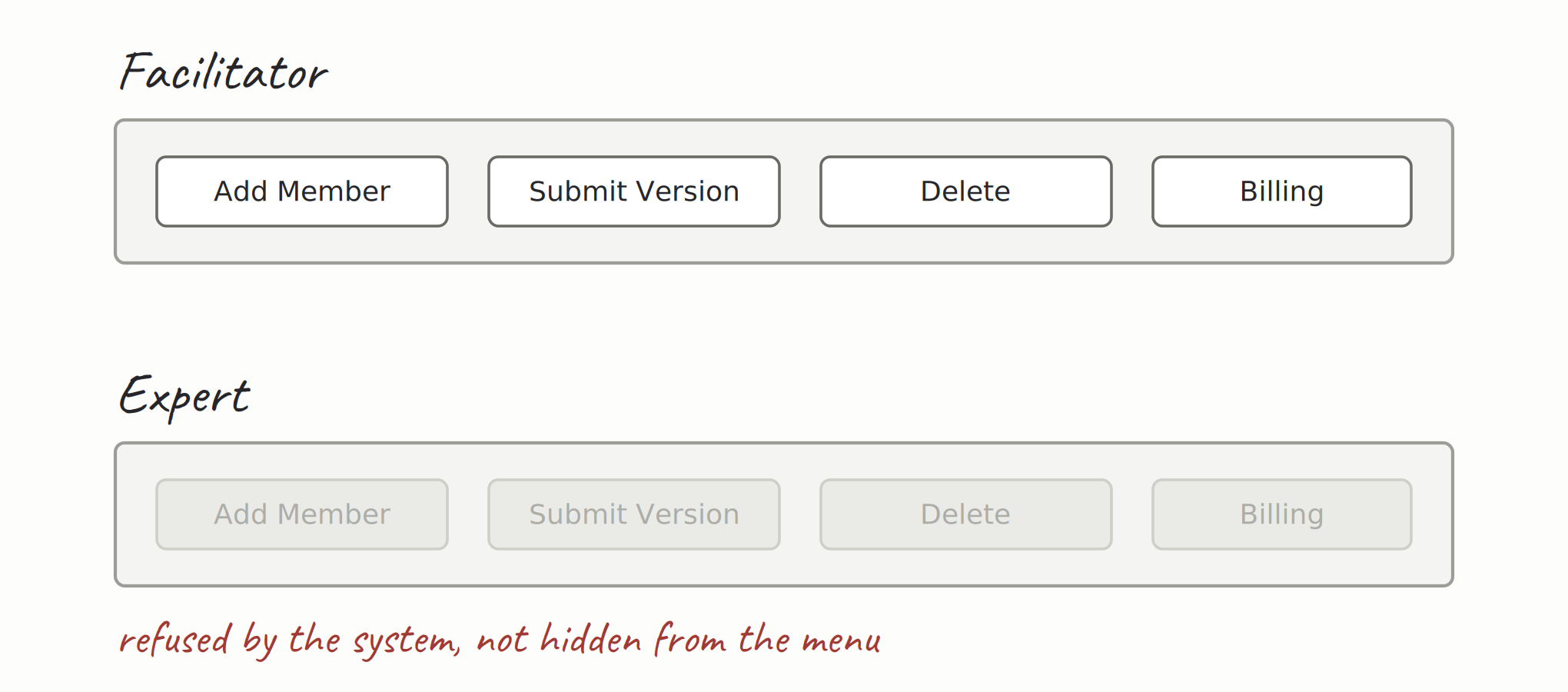
Only a Facilitator can create a Domain, add a member or submit a version. Creating a Domain draws a boundary around one part of the business.
The First Step: Final Event, Initial Action
With the roles set, every session opens the exact same procedural way, regardless of which business is on the board.
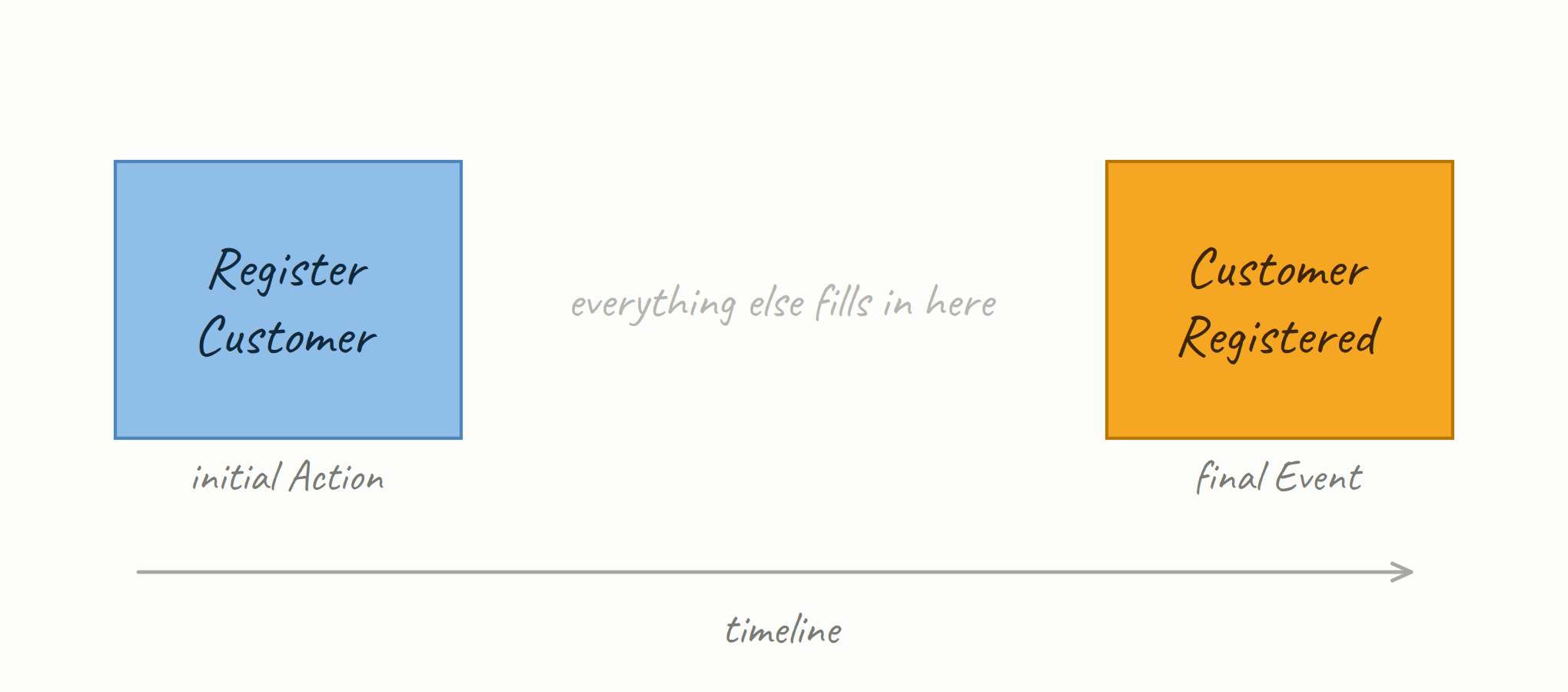
The final Event goes on the right, the initial Action on the left. Business experts place intermediate Events that explain the business scenarios, then Actors involved.
Hotspots, As You Go
Filling that space rarely goes smoothly. Doubts, contradictions, constraints and disagreements appear while the timeline is being built.
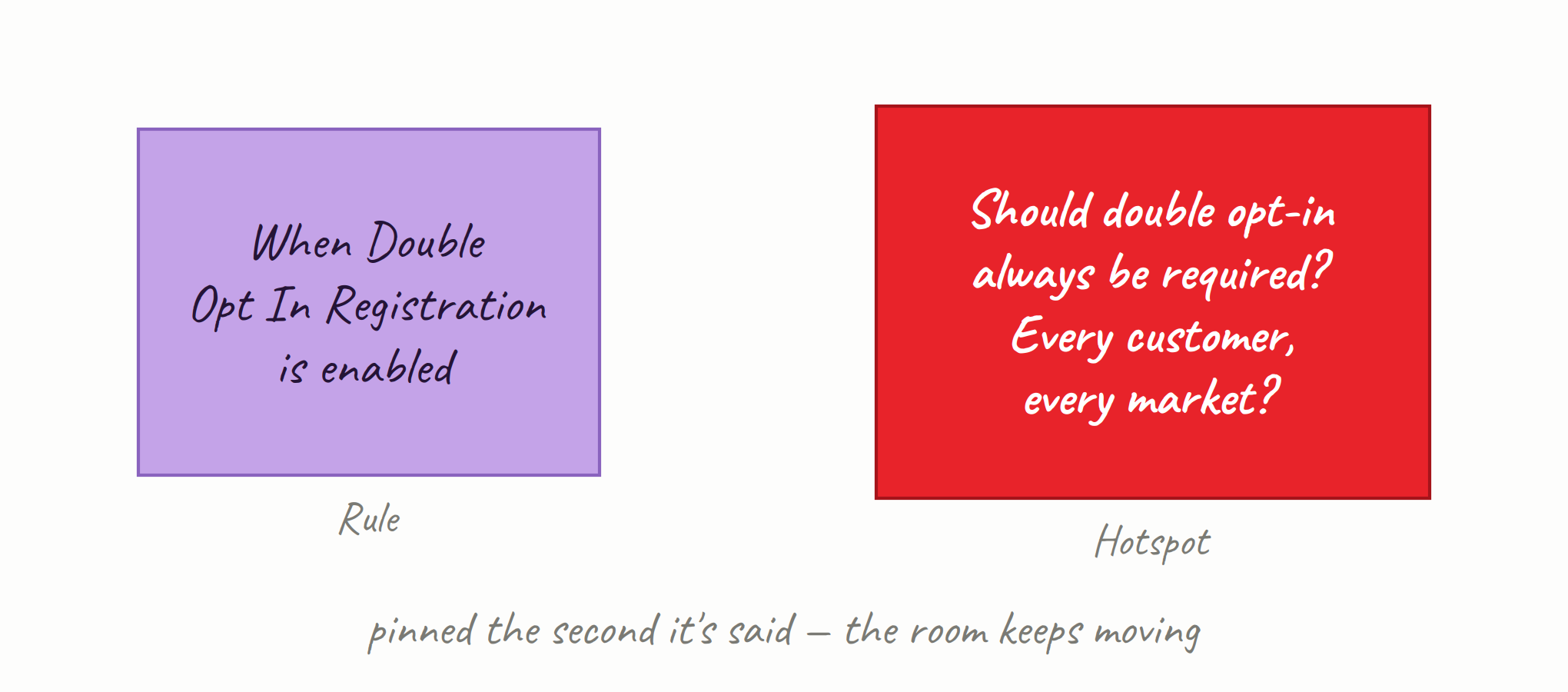
None of that gets argued to a conclusion on the spot. You pin it as a Hotspot and keep the Event Storming session moving.
Actors and External Systems
As the timeline fills in, the people and existing systems get added the way the Business and IT experts actually talk about them.
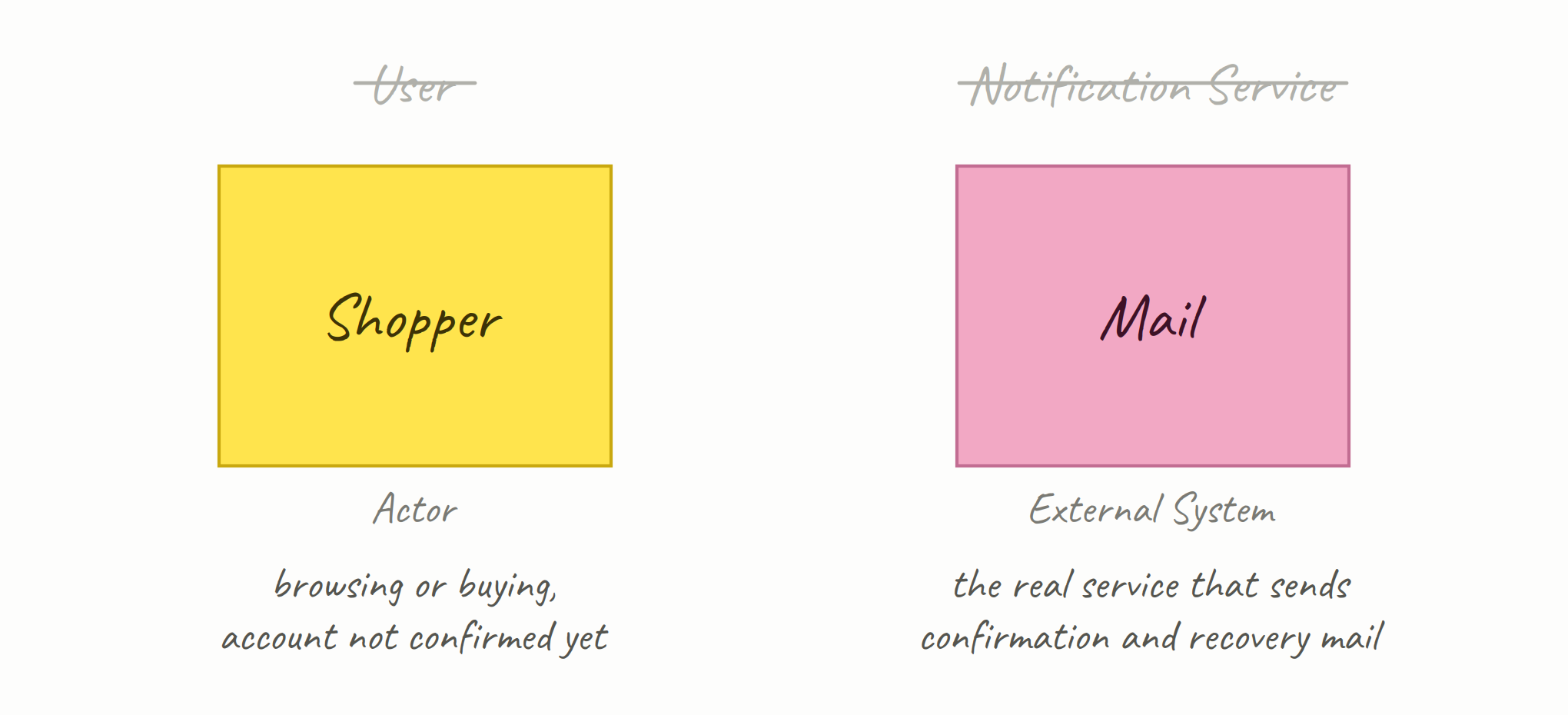
Here the Actor is Shopper, someone browsing or buying. This External System is the email broker service that Business experts call Mail.
Aggregates Connected to Events
An Event is a verb written in the past tense because it already happened. On this timeline, something meaningful had to change to cause it.
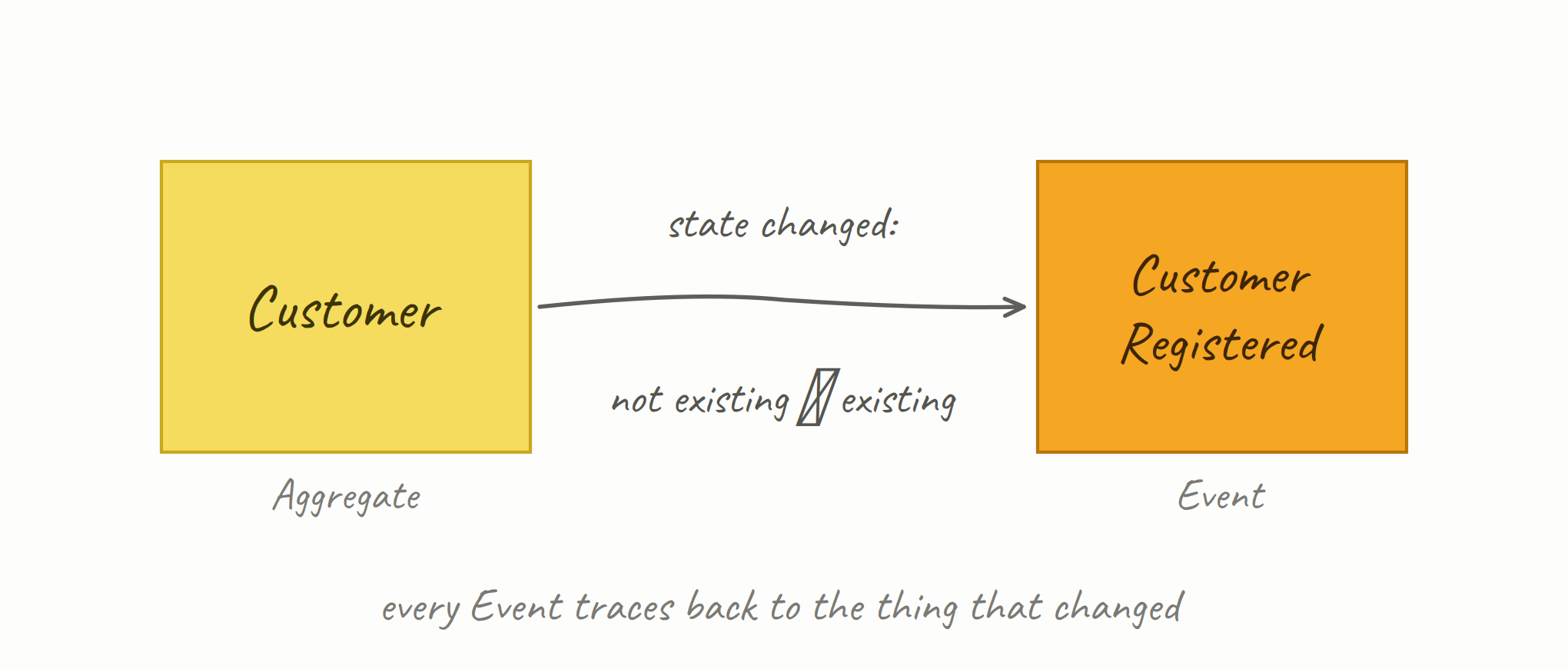
An Aggregate is the business object in context of the business domain. Here Customer, and the arrow drawn live from it to Event marks the moment it's created.
The Nouns Still Missing
After Aggregates connect to Events and Terms go up, a Facilitator instructs IT experts to find undescribed nouns still hiding in the labels.
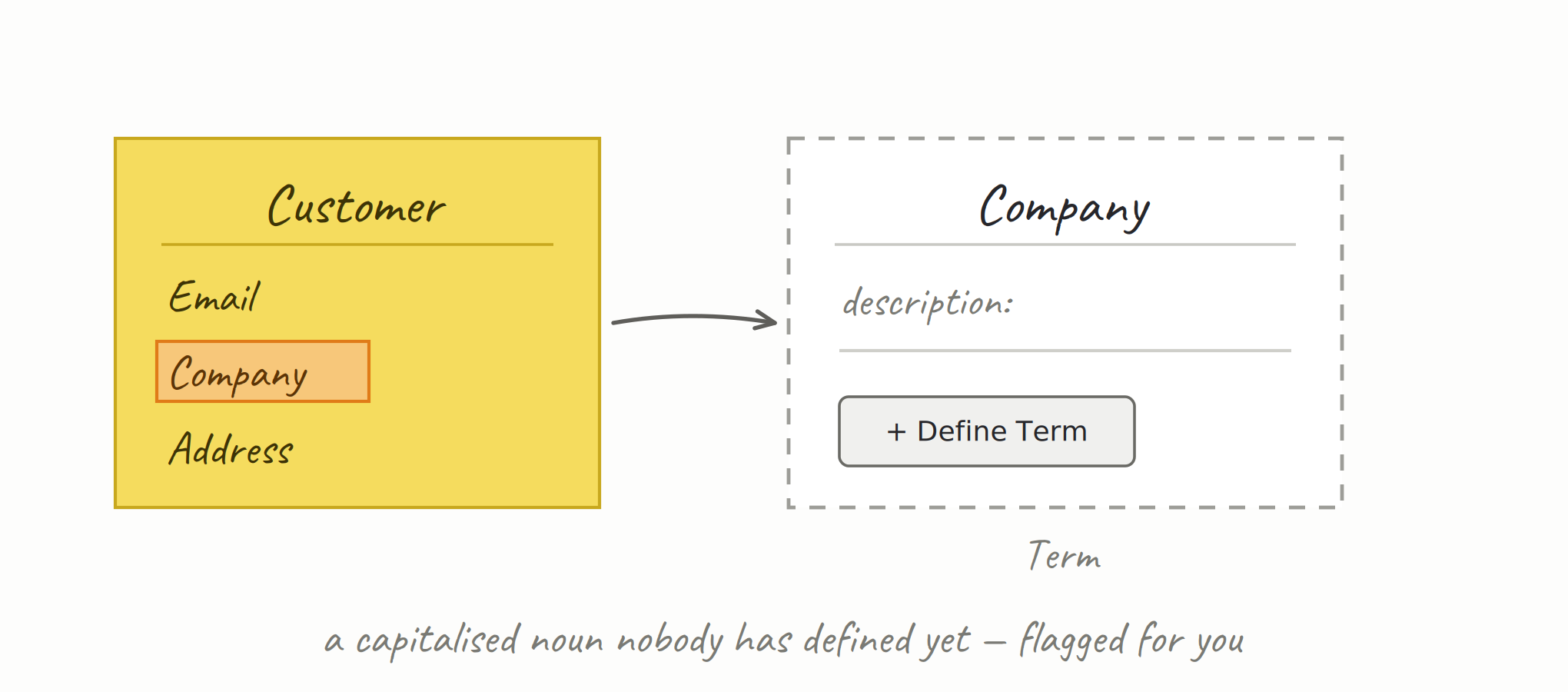
Experts turn nouns into Terms or Attributes. An Aggregate is an element on the board with an identity and its own lifecycle, while an Attribute is just a value or field inside the Aggregate.
Actions Connected to Aggregates or External Systems
An Action is a command issued by an Actor, written in the imperative.
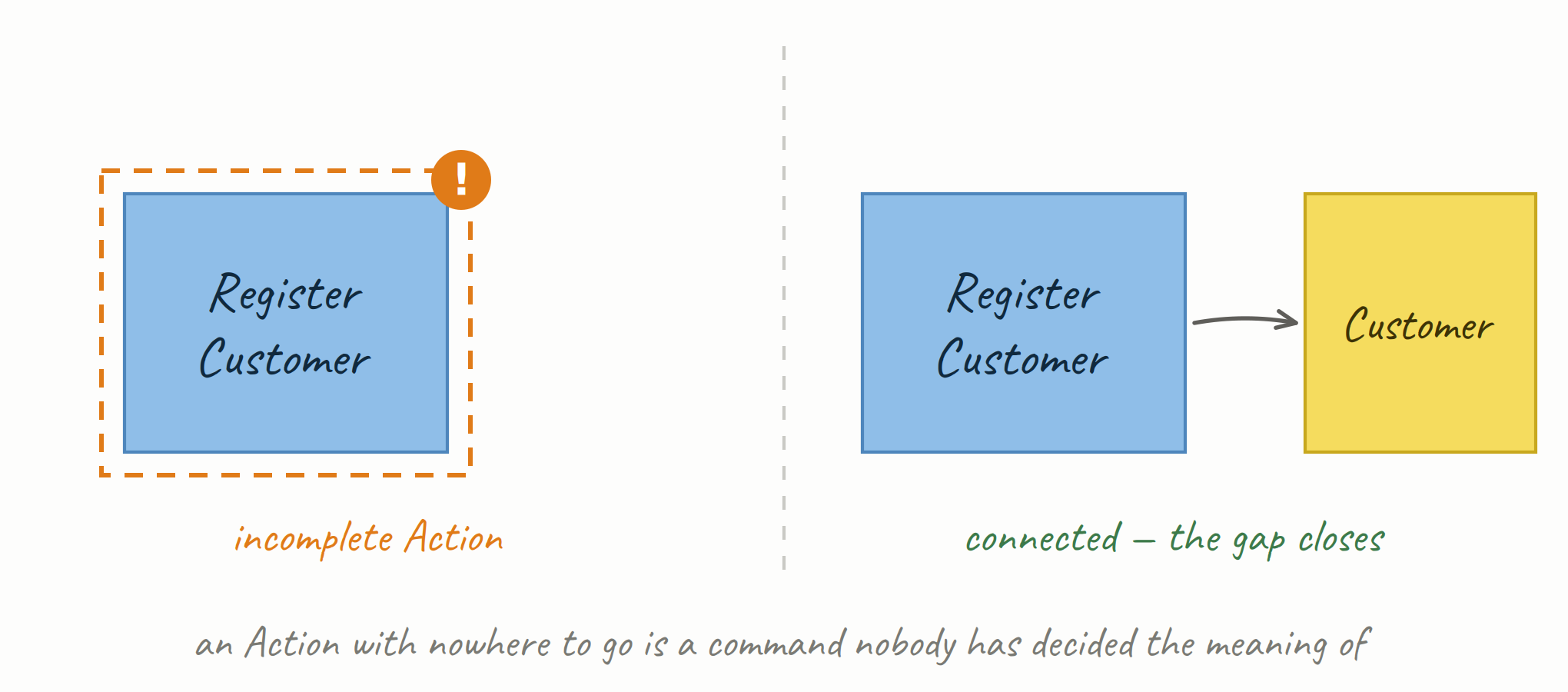
StormPilot checks for the missing connections, incomplete Aggregates and undefined Terms.
Rules: The Policies Nobody Wrote Down
A Rule is a guard between Actor and Action, between Event and Action.
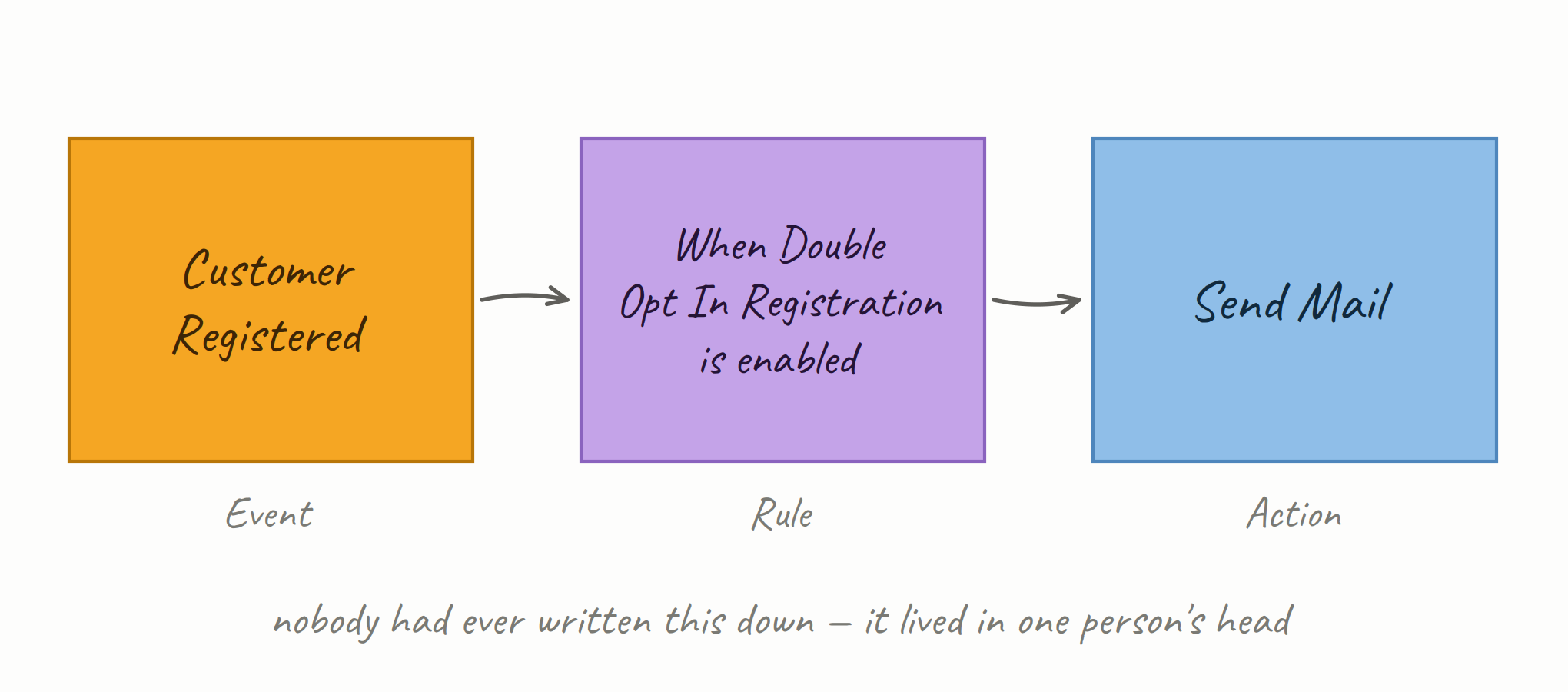
Here that Rule checks whether double opt-in is enabled. Only then does the Customer get emailed after registering.
Closing the Path
Every Actor placed so far needs somewhere to actually look. That somewhere is a View.
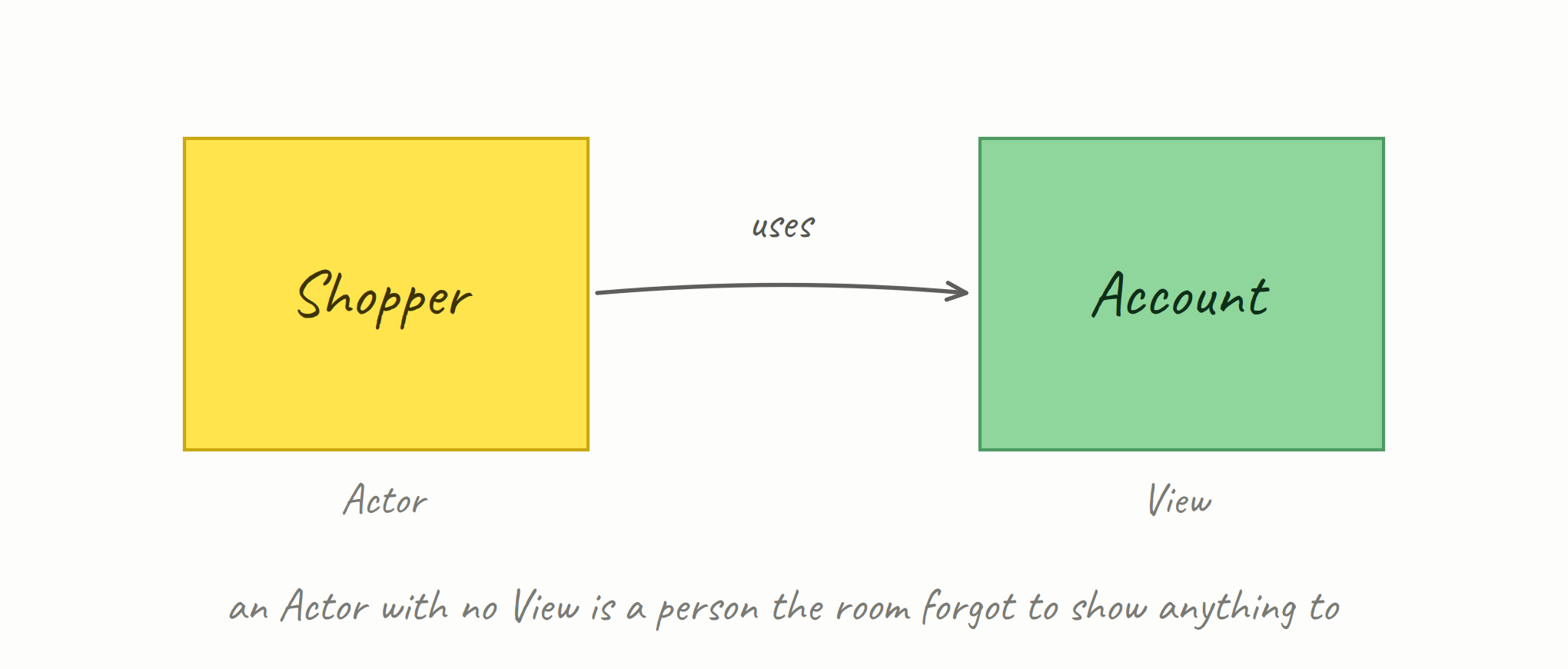
Shopper connects to the Account view. This completes the base Event Storming path from Actor to Event.
From Timeline to Acceptance Tests
Once the timeline holds together, a Facilitator has Business and IT experts read it backward, to catch what reading it forward tends to miss.
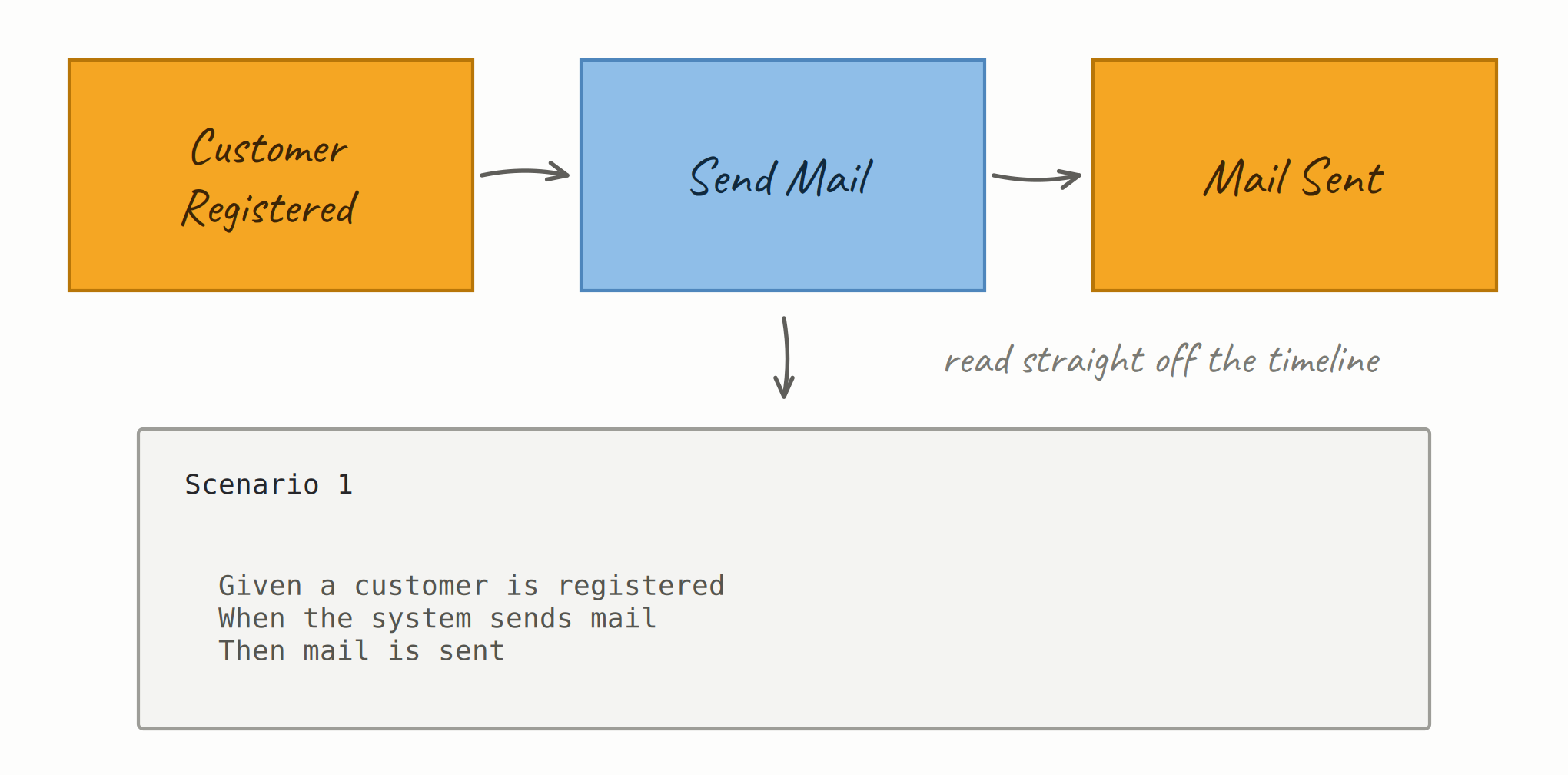
Pay attention to noun and verb consistency in the path: Register Customer, Customer, Customer Registered.
Structural Checks You Don't Have to Remember
Five checks run automatically after every change: disconnected elements, invalid arrows, incomplete flows, undefined terms and duplicate labels.
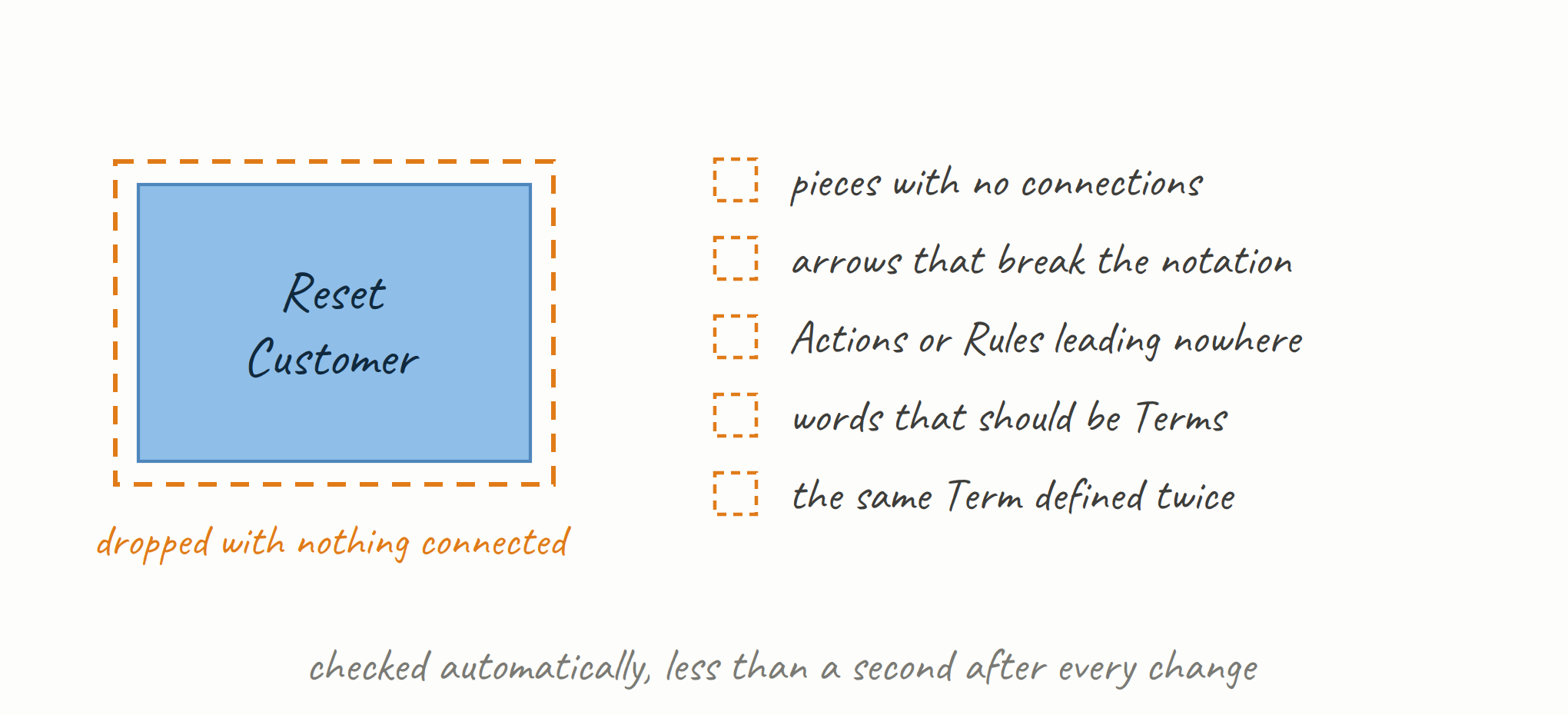
Drop Reset Customer with nothing connected, and the orange dashed border appears before you reach for the next sticky.
AI That Completes the Domain
Click Propose in the Specs panel, and the assistant reads the Domain elements.
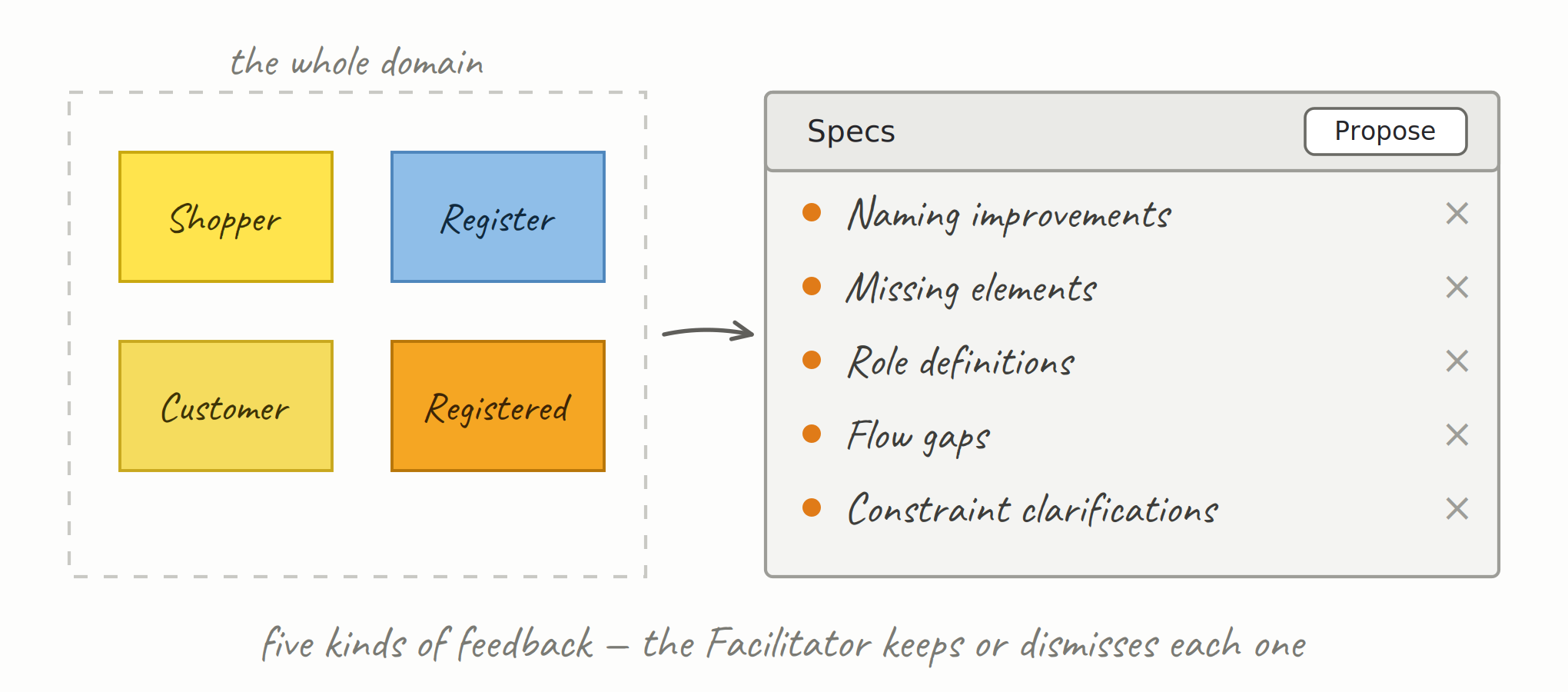
You already closed these paths. The assistant, trained on real industry practice, uses them to finish the rest of the domain.
The Spec Comes From the Domain
The Domain spec can be exported as JSON, a picture or Markdown. Every format traces back to the same elements, deterministically.
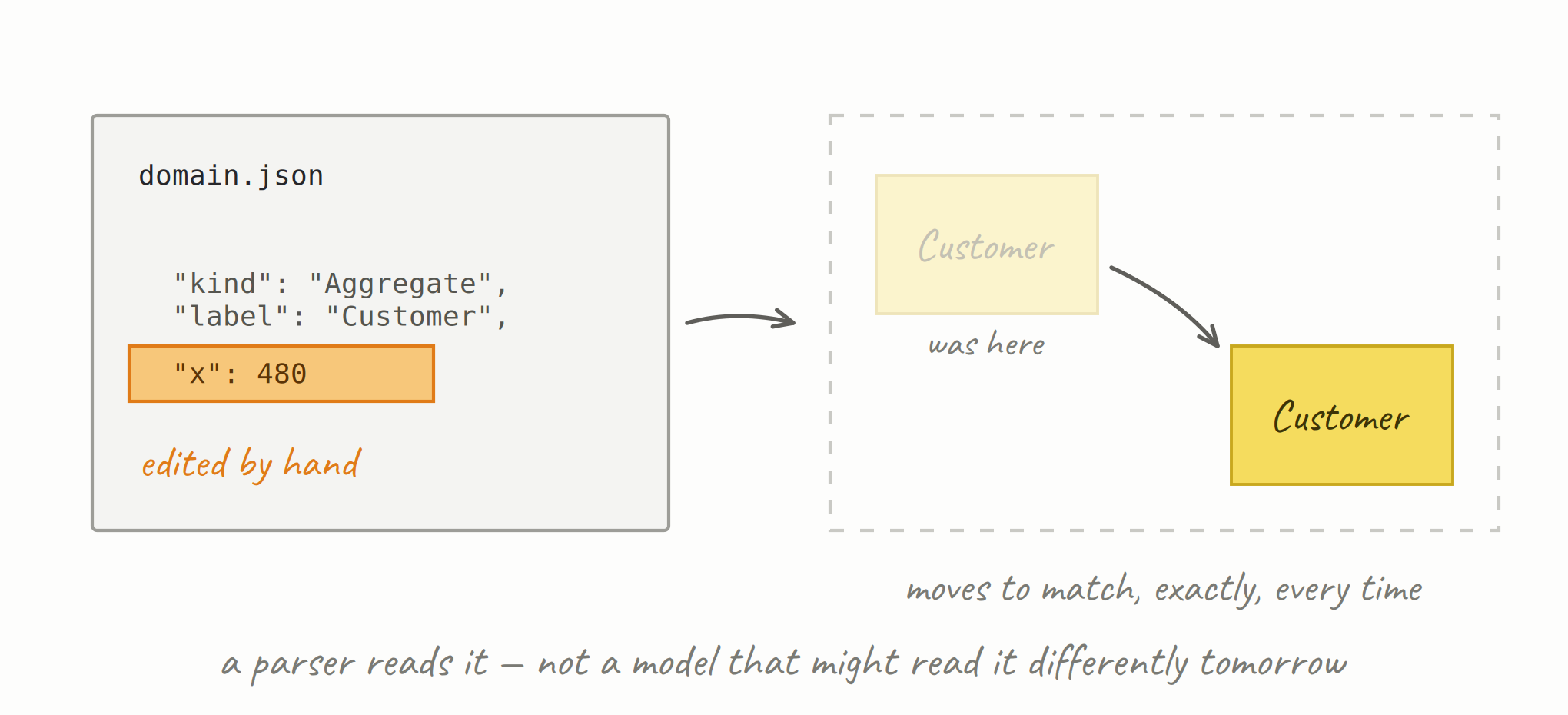
Run it again next week and you'd get the exact same result. There's no AI in the loop to change its mind.
Nobody Writes These By Hand
One diagram, four sections: User Interface, Application Programming Interface, Data Model and Behavior.
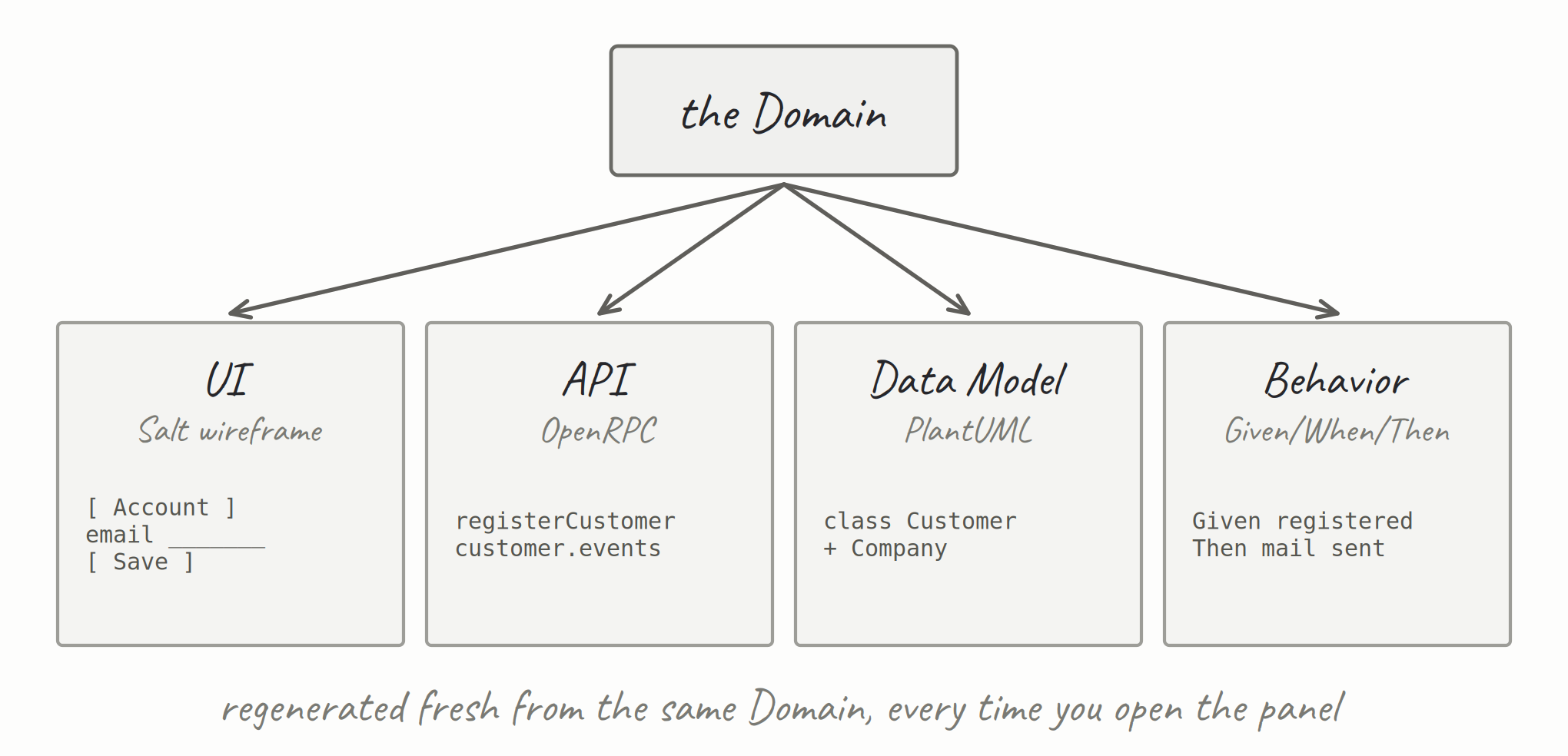
Your coding agent already knows how to read the standard Salt, OpenRPC, PlantUML and Gherkin syntax.
The Version Is the Release
When ready, a Facilitator makes a version of the diagram. From that point on it's frozen and ready to compare.
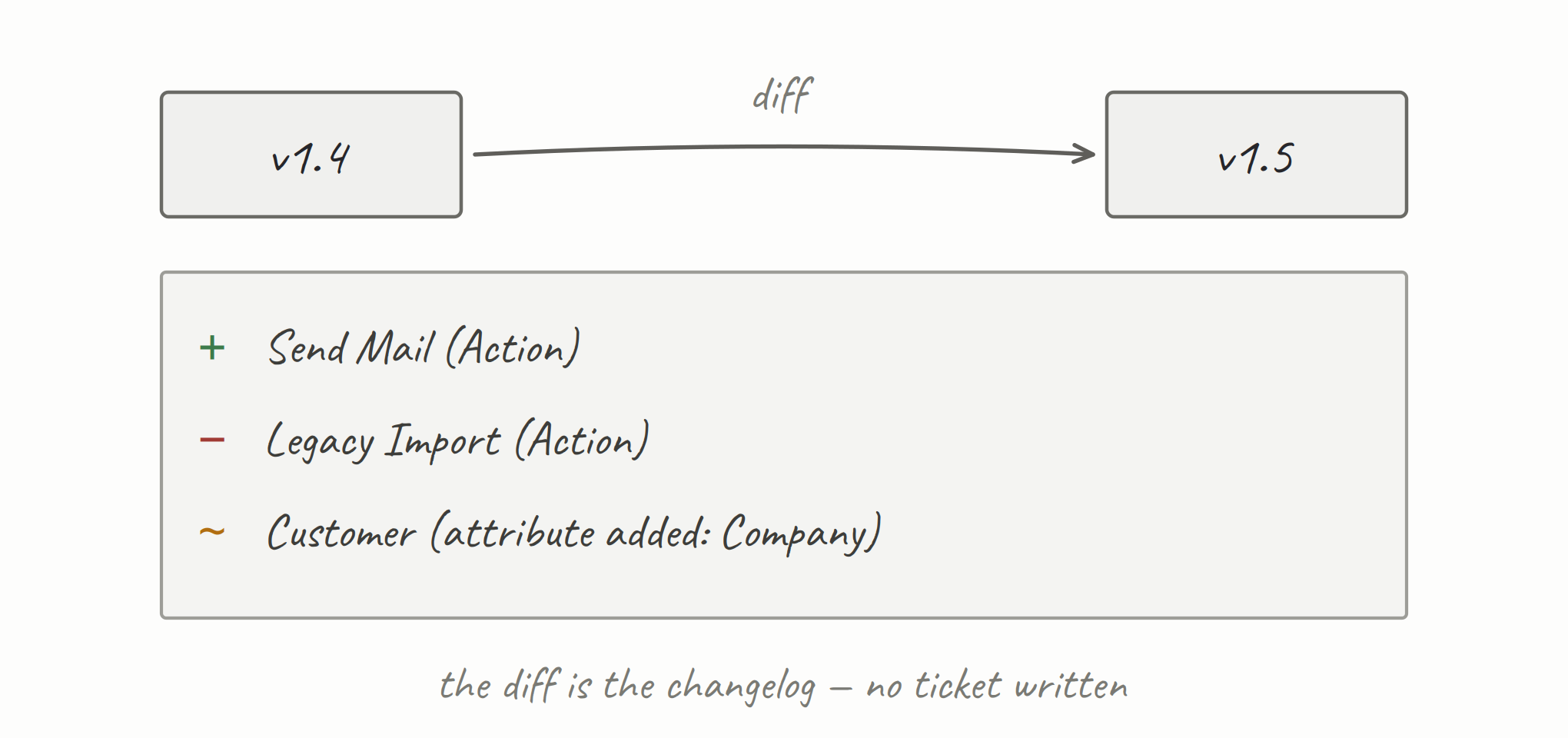
Teams don't need a separate task tracker or sprint management for agentic development. The version already tells what is getting delivered.
Built for Remote Collaboration
Up to 50 people in one session can edit the board and see each other move live.
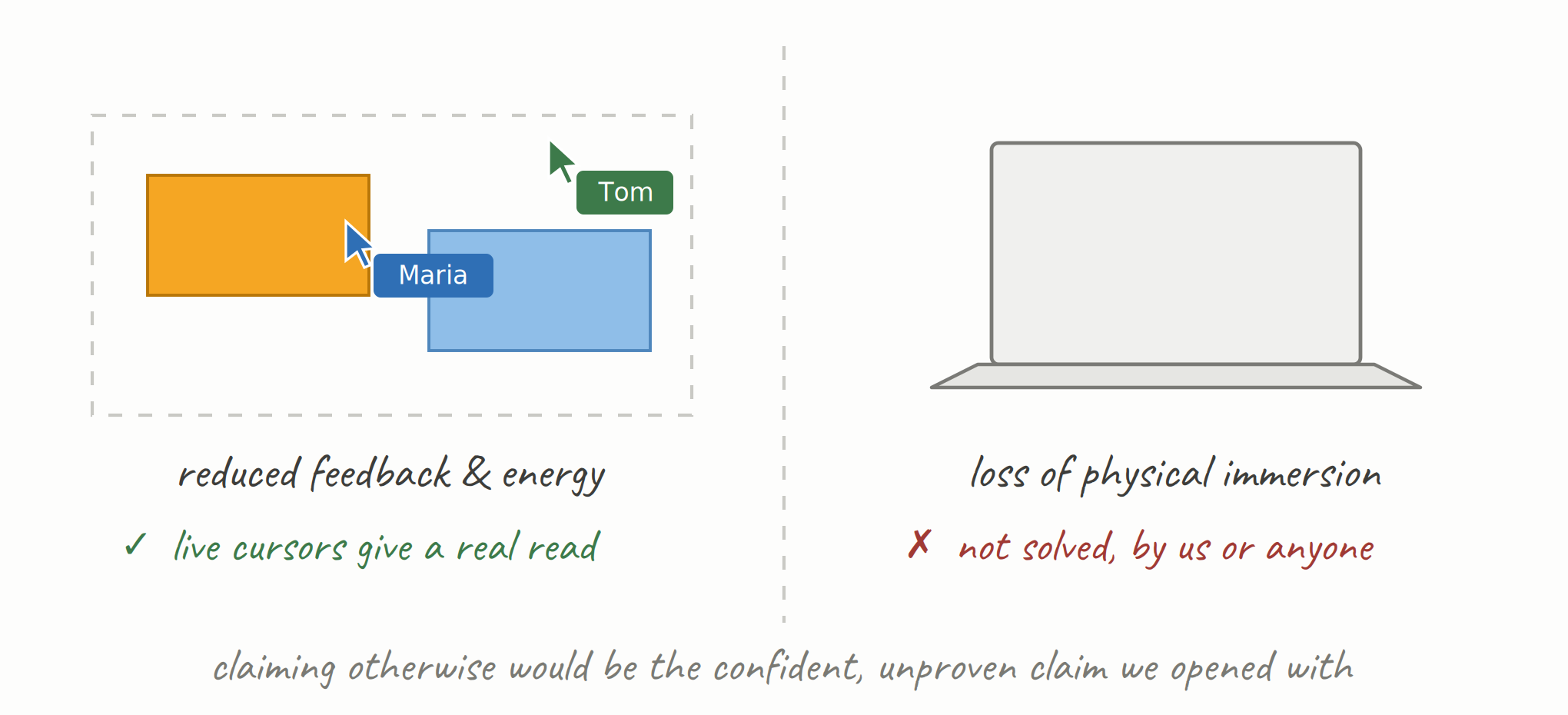
StormPilot is designed for Event Storming. The editor enforces roles, shows cursors of the users in real time, validates changes. The board has enough space for notes and variations of the business process.
Try It Now
Talk is cheap, where is the demo?
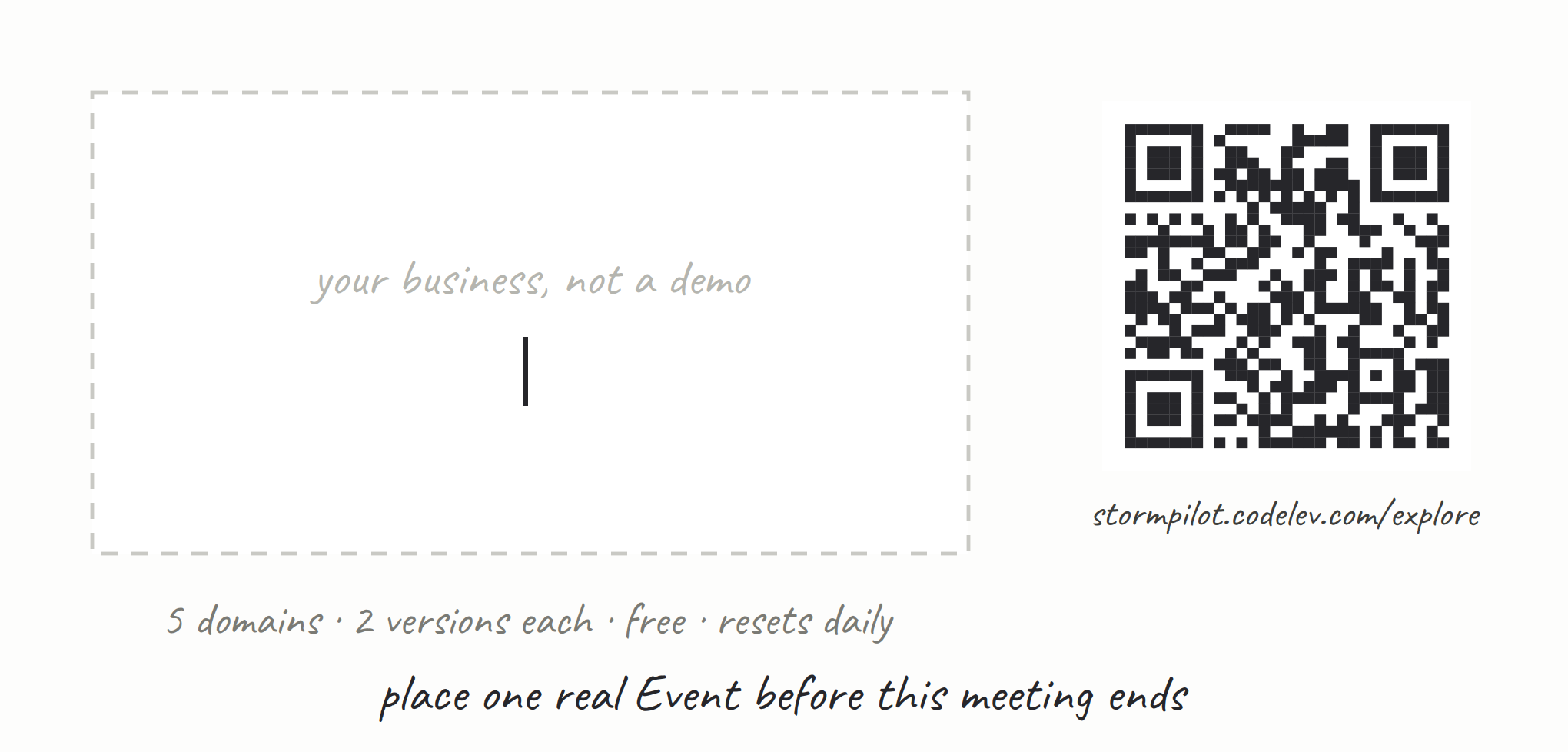
No account, no install, no cost. Open the Sandbox, place one Action, Aggregate and Event, export the spec before this meeting ends.
Happy Event Storming
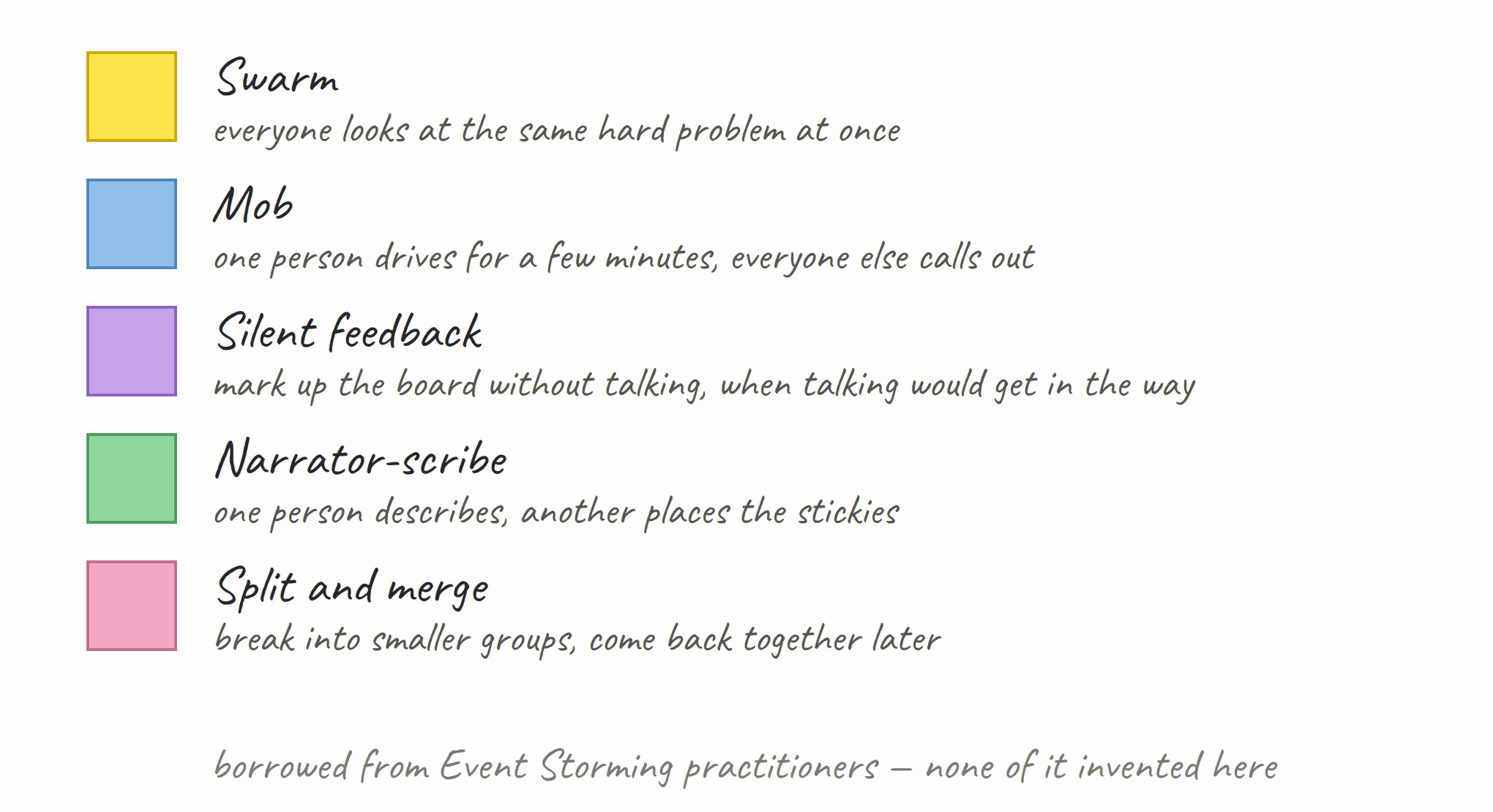
Everything so far came from StormPilot. These recommendations come from Event Storming practitioners.
Questions?